
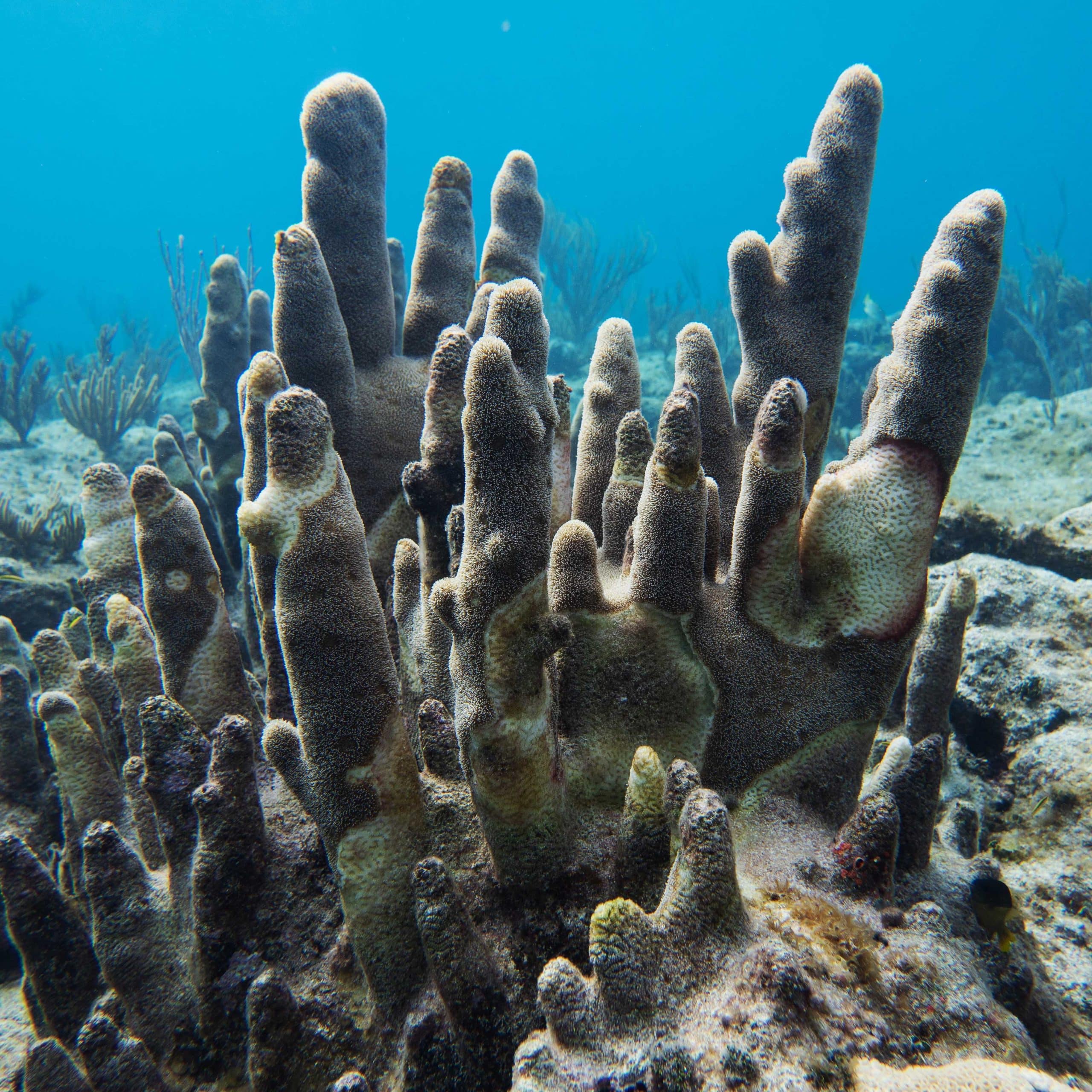
Active Ocean Pandemic
The most lethal coral disease ever recorded is spreading across the Caribbean. Over 30 species. More than 25 nations. No known cure. PIMS is on the frontlines.
30+
Species of reef-building coral affected
25+
Caribbean nations and territories infected
2014
First identified off the coast of Miami, Florida
100%
Mortality rate in many affected species
Understanding the Threat
Stony Coral Tissue Loss Disease is not like other coral diseases. It is faster, more lethal, and more indiscriminate than anything marine scientists have encountered. Since its discovery off the coast of Miami in 2014, SCTLD has radiated across the Caribbean at astonishing speed, killing corals that took centuries to grow in a matter of weeks.
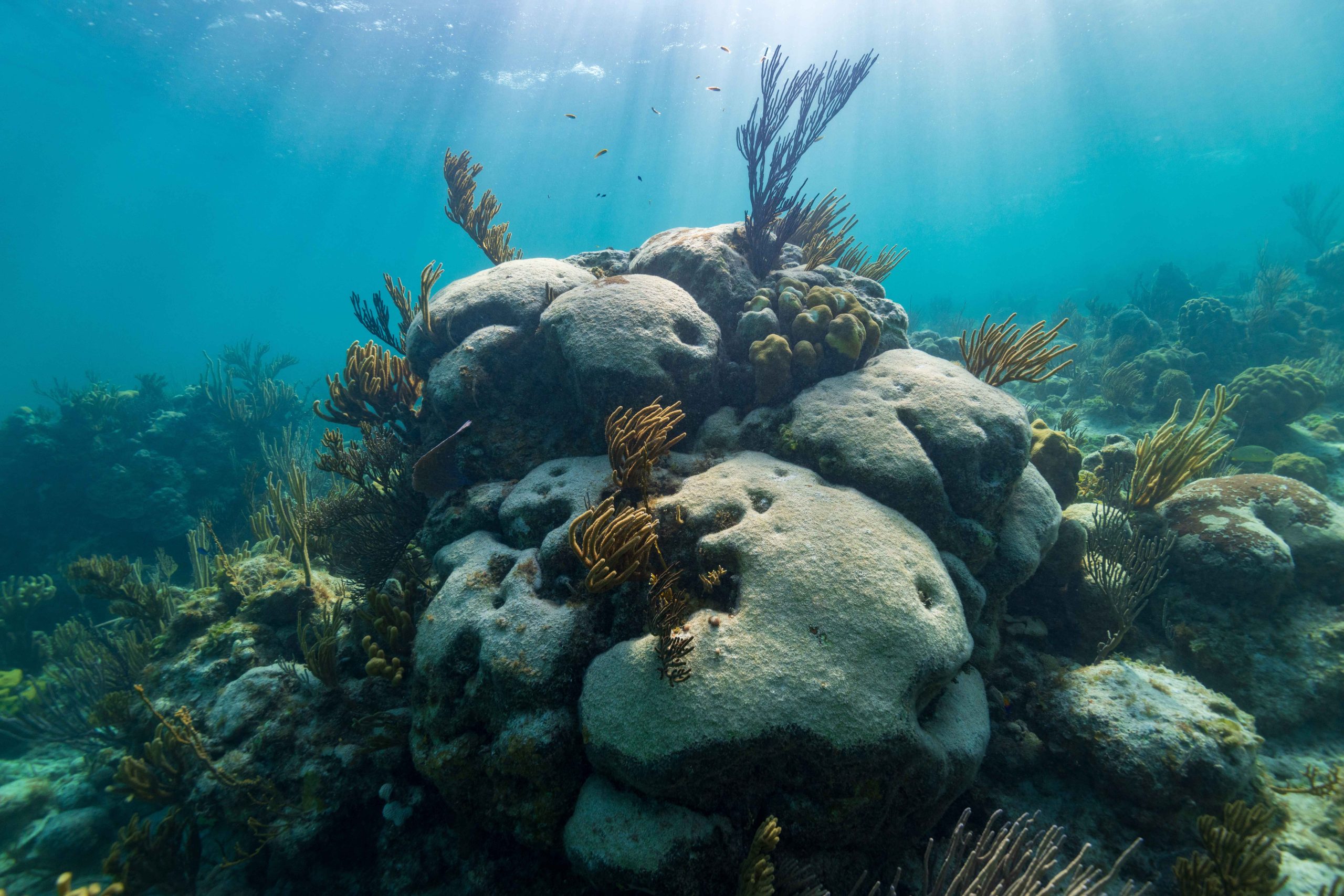
The disease targets the foundation species of Caribbean reefs: brain corals, pillar corals, star corals, and others that form the structural backbone of reef ecosystems. When these species die, the entire reef community collapses. Fish lose their habitat. Shorelines lose their protection. Fisheries lose their nursery grounds. Tourism economies lose their primary attraction.
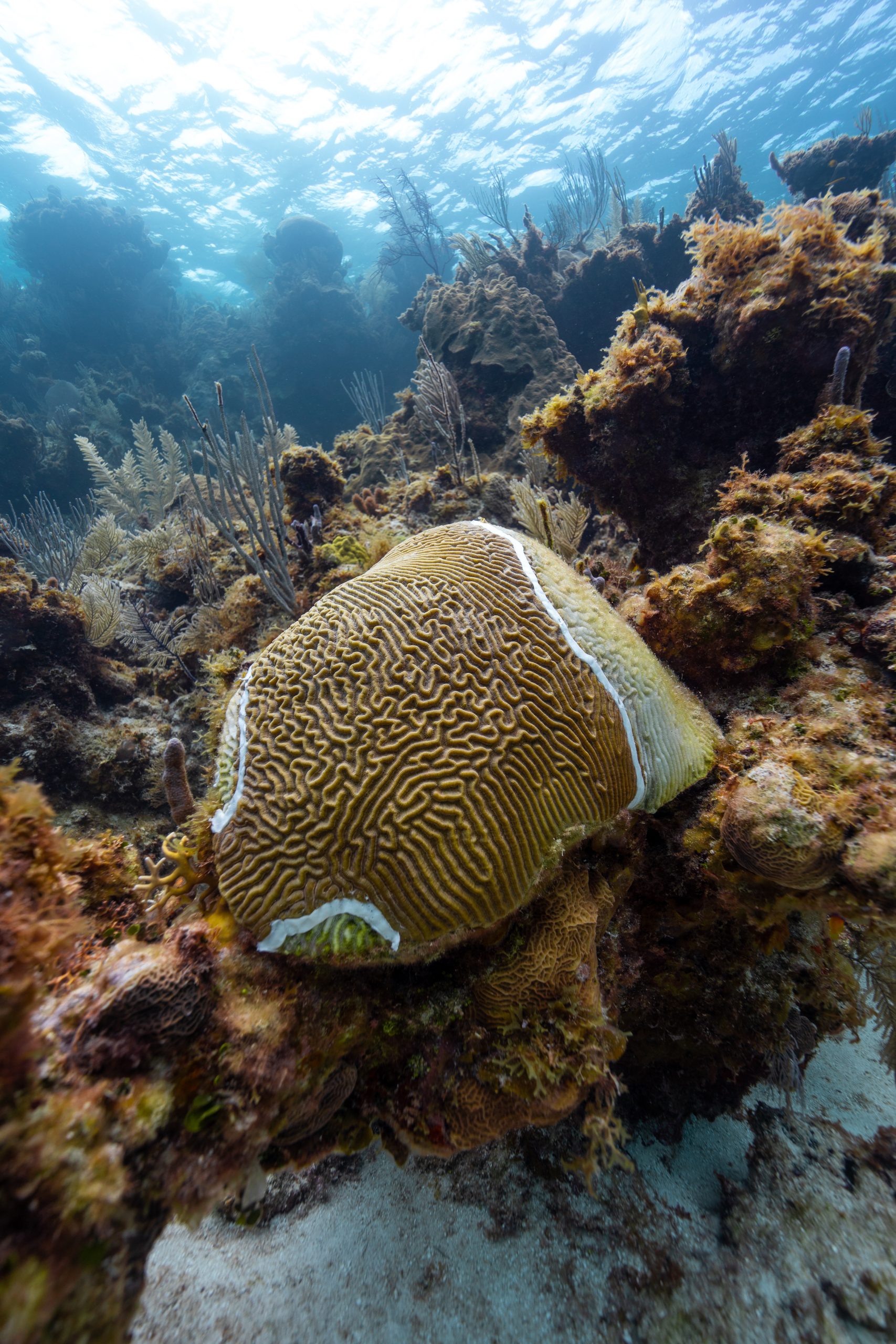
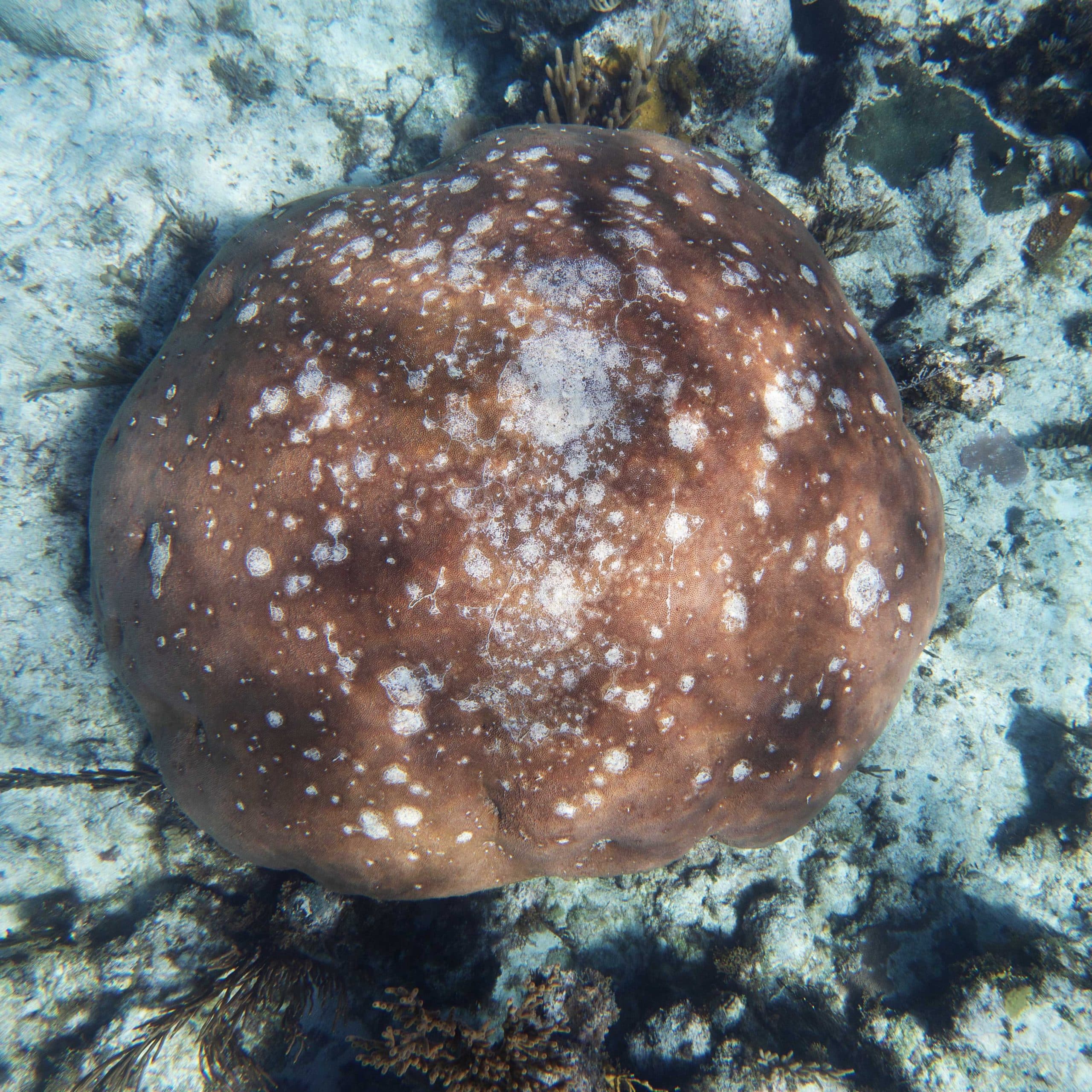
A brain coral in The Bahamas showing the characteristic white lesion of SCTLD. PIMS scientists applied white antibiotic paste along the lesion margins to stop the disease’s progression. Left untreated, it kills tissue faster than the coral can recover, leaving bare skeleton behind.
Across The Bahamas, PIMS surveys have documented SCTLD on reefs in New Providence, Grand Bahama, Abaco, The Exumas, Eleuthera, and more. The disease continues to spread to new sites. Without intervention, the ecological and economic consequences will be measured in generations, not years.
Read the full study: Functional extinction of Florida’s reef-building Acropora following the 2023 marine heat wave | PIMS coverage
A Decade of Devastation
2014
An unknown disease appears on coral reefs off the coast of Miami, Florida. Initial reports describe rapid tissue loss across multiple species simultaneously. Nothing like this has been seen before.
2019-20
SCTLD is confirmed on reefs in New Providence. PIMS co-founds the Bahamas SCTLD Task Force and immediately begins reef surveillance and disease monitoring across the archipelago. The response starts the same year the disease arrives.
2021
PIMS launches antibiotic treatment training workshops in partnership with Nova Southeastern University, teaching divers and government officials to apply life-saving antibiotic paste to infected corals. PIMS research reveals commercial shipping as a likely vector for SCTLD spread in The Bahamas. National Geographic features the crisis.
2022-23
PIMS partners with the Cayman Islands to extend monitoring regionally. Treatment teams race to save corals around Cat Island and document SCTLD advancing north through Andros. Then an unprecedented marine heat wave compounds the crisis. Florida’s elkhorn and staghorn corals, already weakened by SCTLD, are pushed to functional extinction.
2024
PIMS receives the CORDAP award to develop and test coral probiotic treatments, a fundamentally new approach to combating SCTLD. Instead of treating individual corals with antibiotics, the probiotic method aims to give entire reef communities the beneficial bacteria they need to resist infection.
2026
PIMS scientists conduct the first in-situ field trials of coral probiotics on Caribbean reefs. In San Andres Island, Colombia, beneficial bacteria isolated from disease-resistant corals are applied directly to infected reef sites. Three key species tested across two experimental runs. The disease has reached 25+ nations, but for the first time, science has a promising scalable tool to fight back.
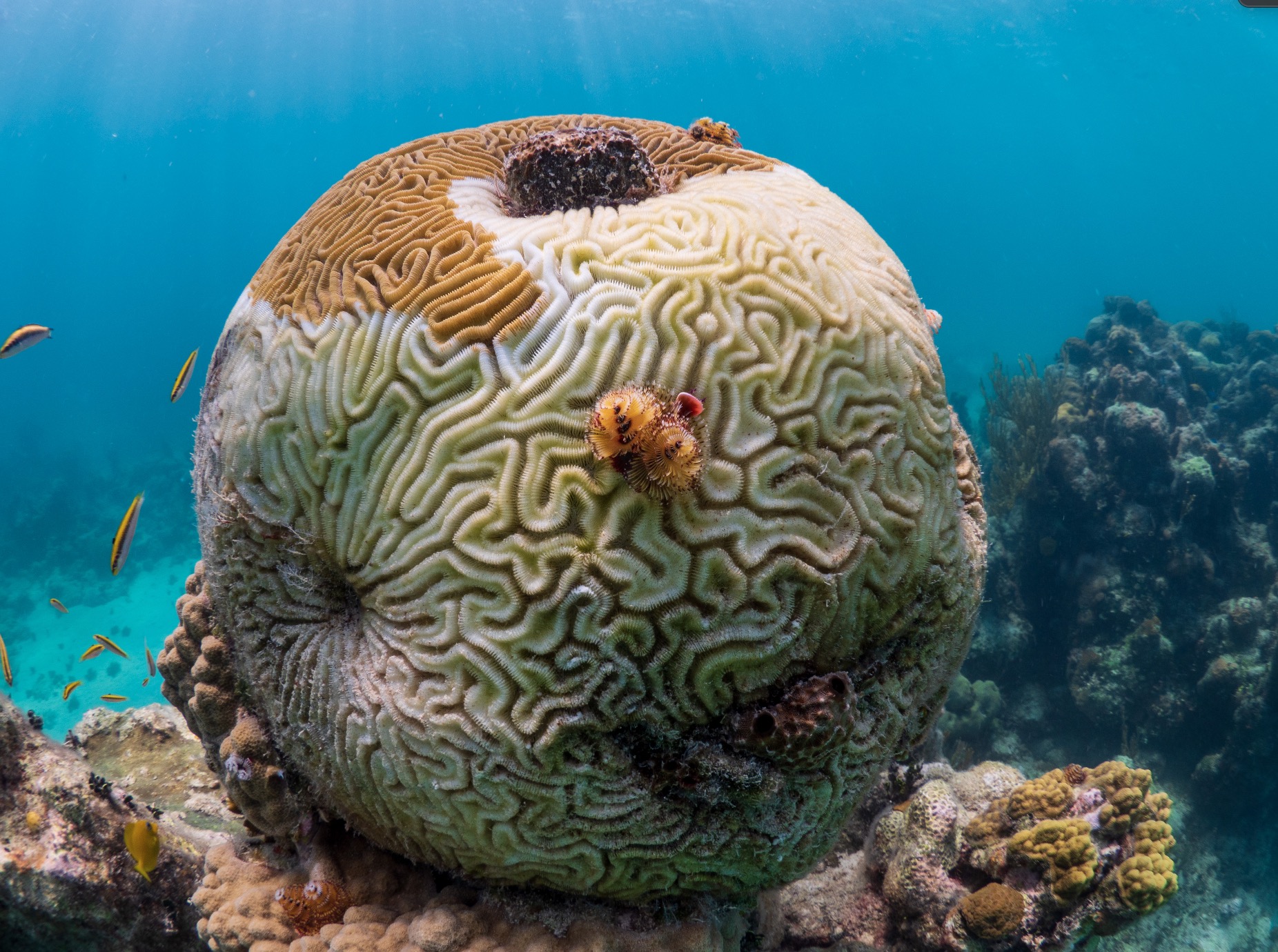
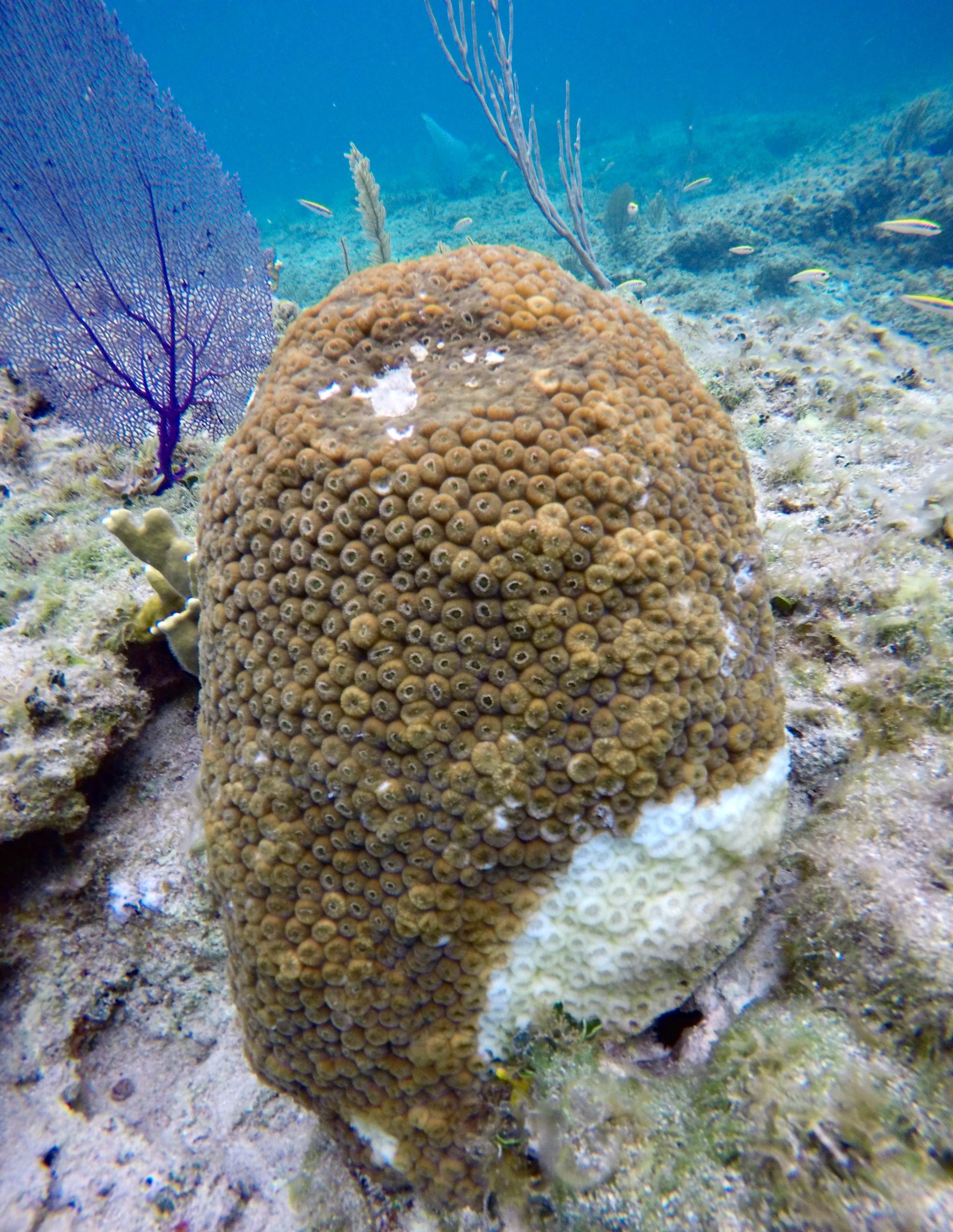
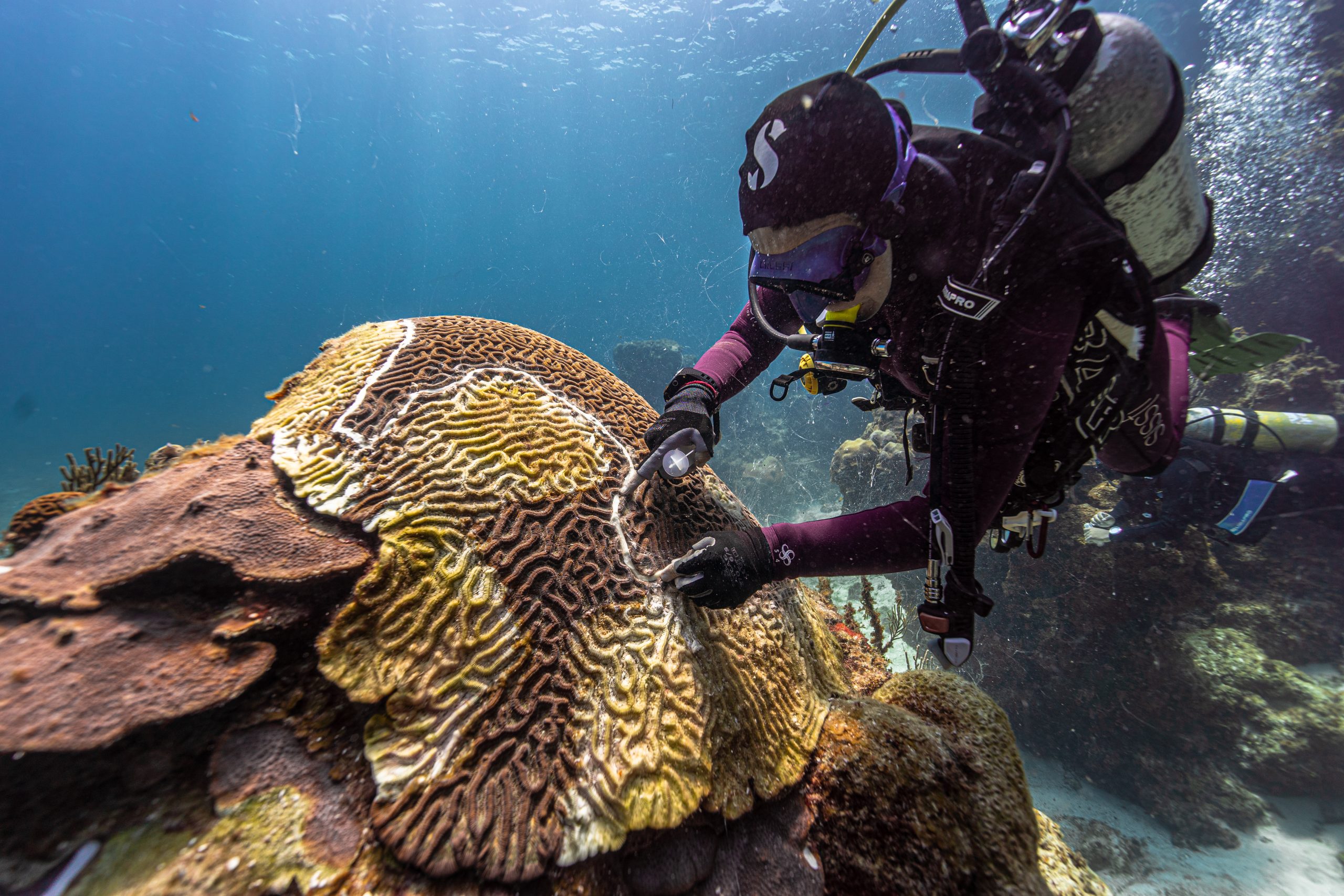
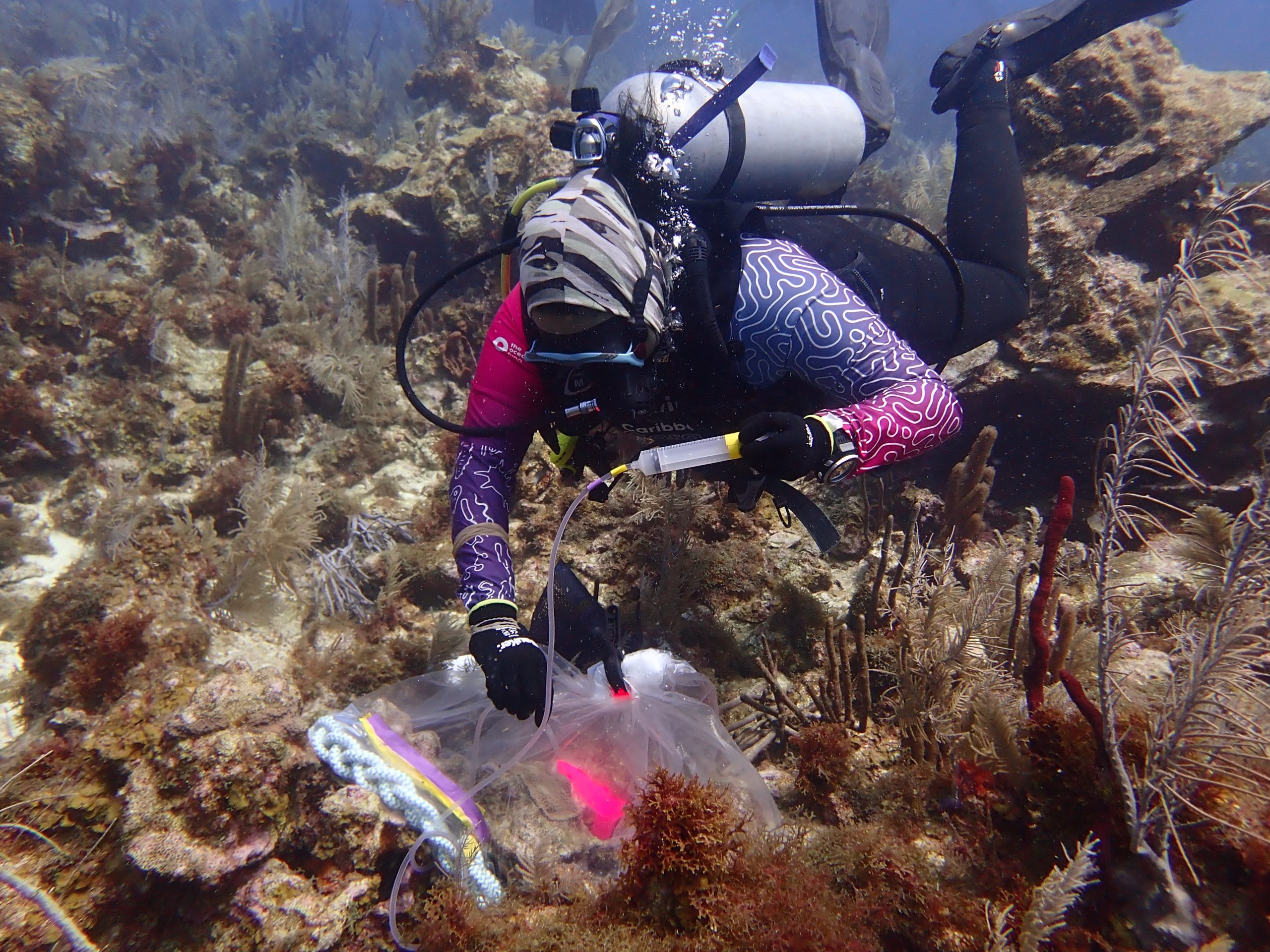
PIMS scientists treating SCTLD-infected corals in The Bahamas and conducting probiotic field trials in San Andres, Colombia.
On the Frontlines
PIMS has been fighting SCTLD since the disease first arrived in The Bahamas. As a founding member of The Bahamas SCTLD Task Force, we mobilized a response in 2020, the same year the disease was confirmed on New Providence reefs. By 2021, we were running antibiotic treatment training workshops with Nova Southeastern University, teaching government officials, dive professionals, and partner organizations to apply life-saving antibiotic paste directly onto infected coral colonies.
That work has never stopped. Our scientists have treated corals from Cat Island to Andros, trained government divers from the Department of Marine Resources and Department of Environmental Protection, partnered with the Cayman Islands to extend monitoring regionally, and published research identifying commercial shipping as a likely disease vector. Through the Bahamas Coral Innovation Hub at Atlantis, the Coral Gene Bank, and the Reef Rescue Network, we are simultaneously preserving genetic material, developing coral resilience strategies, and restoring reef areas that SCTLD has degraded.
In 2026, we took the fight international, conducting the first in-situ probiotic field trials in San Andres Island, Colombia, while continuing treatment and monitoring operations across The Bahamas. This is not a new effort. PIMS has been on the frontlines for over six years.
Regular reef surveys across New Providence, Grand Bahama, Abaco, and Eleuthera tracking SCTLD spread and reef health indicators.
Antibiotic paste applied directly to infected corals by trained divers. Government officials and partners certified through PIMS training programs.
The Coral Gene Bank at Atlantis preserves genetic material from disease-resistant colonies for future restoration.
Through the Reef Rescue Network, outplanting thousands of corals to help SCTLD-degraded ecosystems recover.
A Potential Breakthrough
In March 2026, PIMS scientists traveled to San Andres Island, Colombia to conduct the first in-situ field trials of a promising new line of defense: beneficial bacteria isolated from disease-resistant corals.
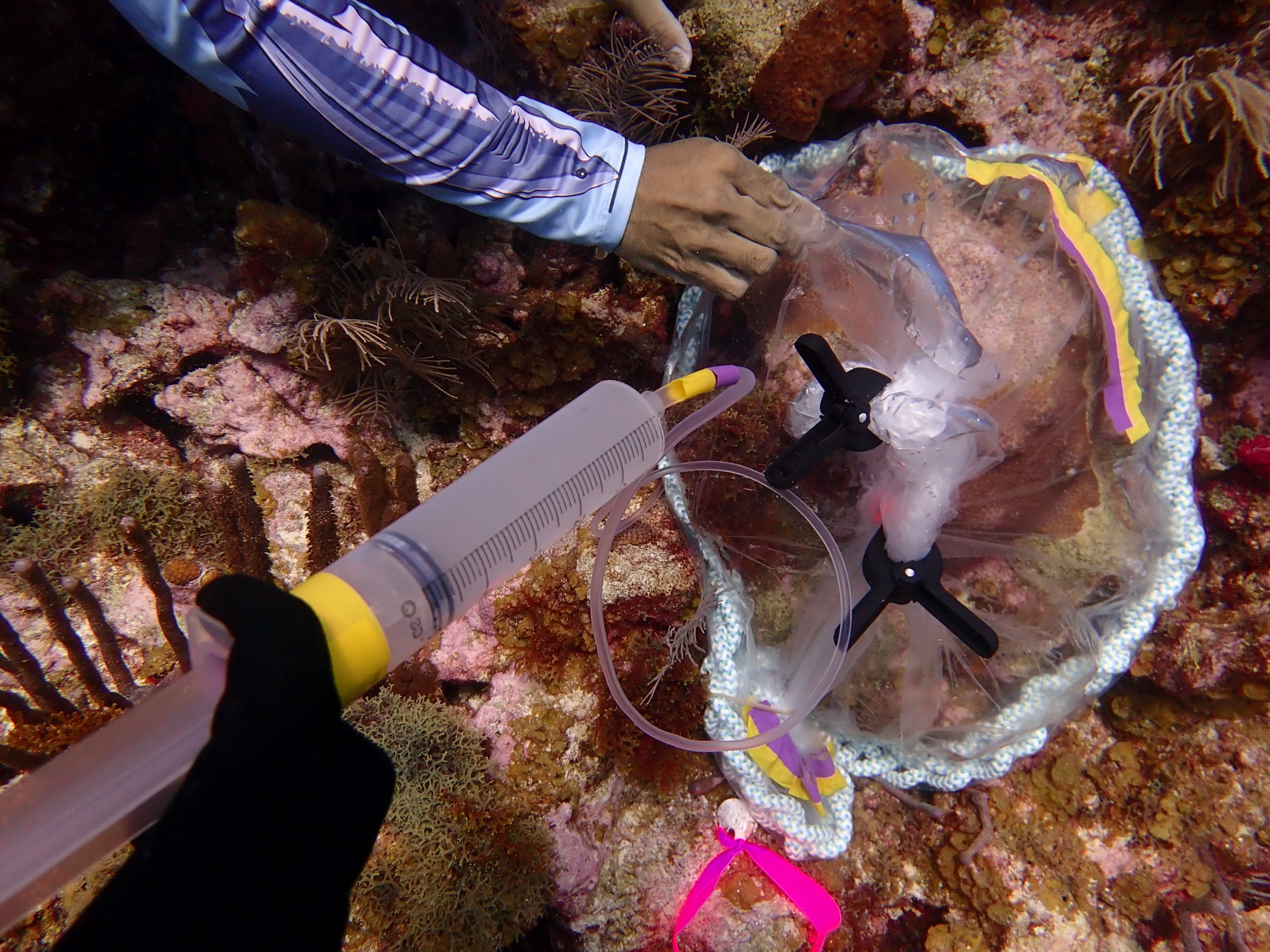
San Andres Island, Colombia. March 2026. A probiotic solution containing beneficial bacteria is injected into a specialized enclosure holding the treatment against the coral colony during the first in-situ field trials.
The approach is elegantly simple in concept: isolate beneficial bacteria from corals that have survived SCTLD, culture them in a lab, then apply them directly to infected reef sites using specialized enclosures that hold the probiotics in contact with coral colonies long enough to colonize and protect them.
Funded by CORDAP and conducted in collaboration with Ushijima Lab, GW Lab, Blue Indigo Foundation, EcoMares NGO, and CORPCORALINA, the trials tested three key reef-building coral species across two experimental runs. The most promising treatment was then applied to prioritized reef sites.
Read more: CORDAP Award: Combatting SCTLD in San Andres Island with Probiotics
See the Science
Protecting Bahamian Reefs: Identifying and Preventing SCTLD
How to Identify SCTLD in the Field
Tips for Identifying SCTLD Underwater
Tracking the Spread of SCTLD
More from us and our partners
Take Action
Whether you are a diver, boater, scientist, or someone who cares about the ocean, you can help.
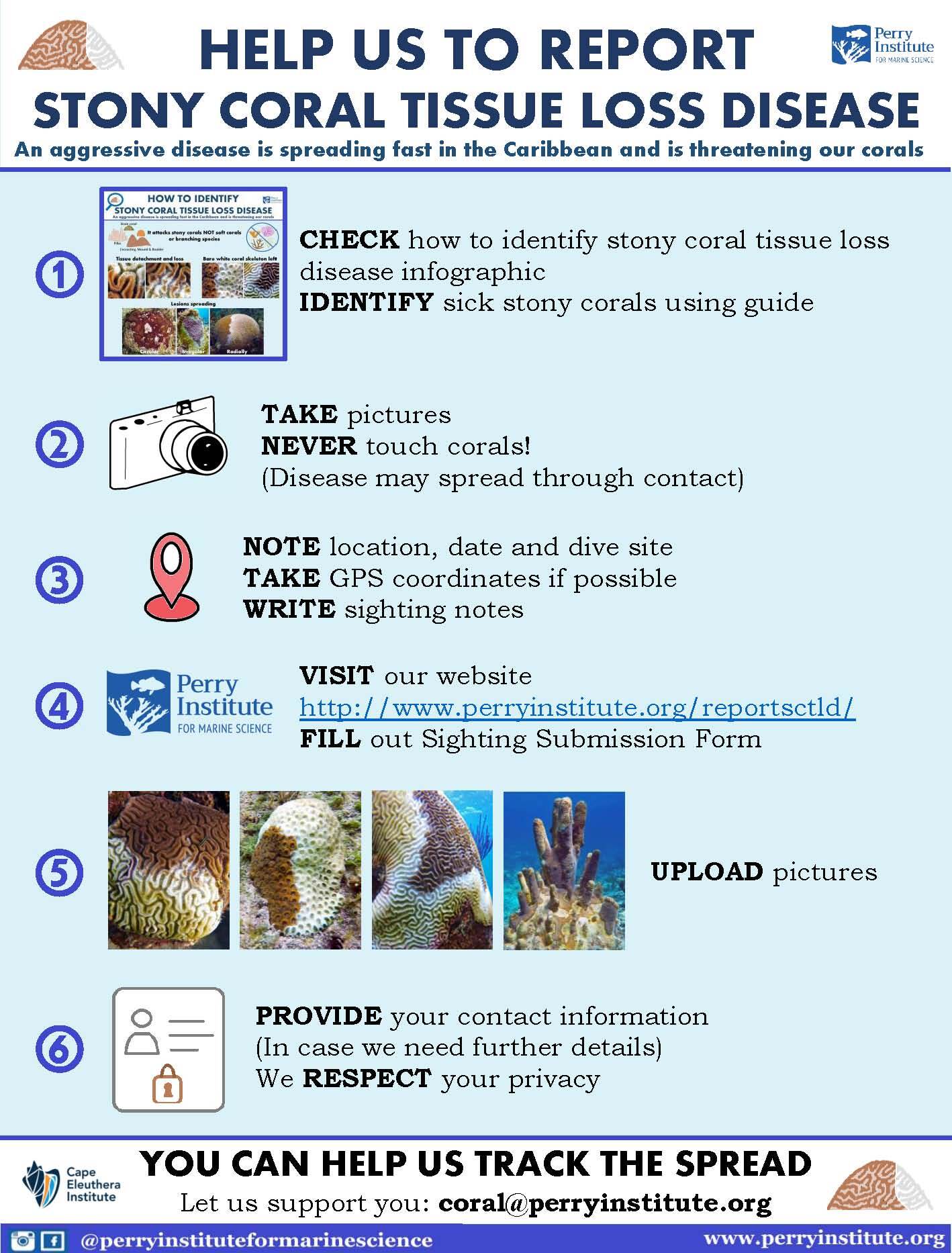
If you see corals with white lesions or tissue loss, report it to PIMS. Include photos and GPS coordinates. Early detection saves reefs.
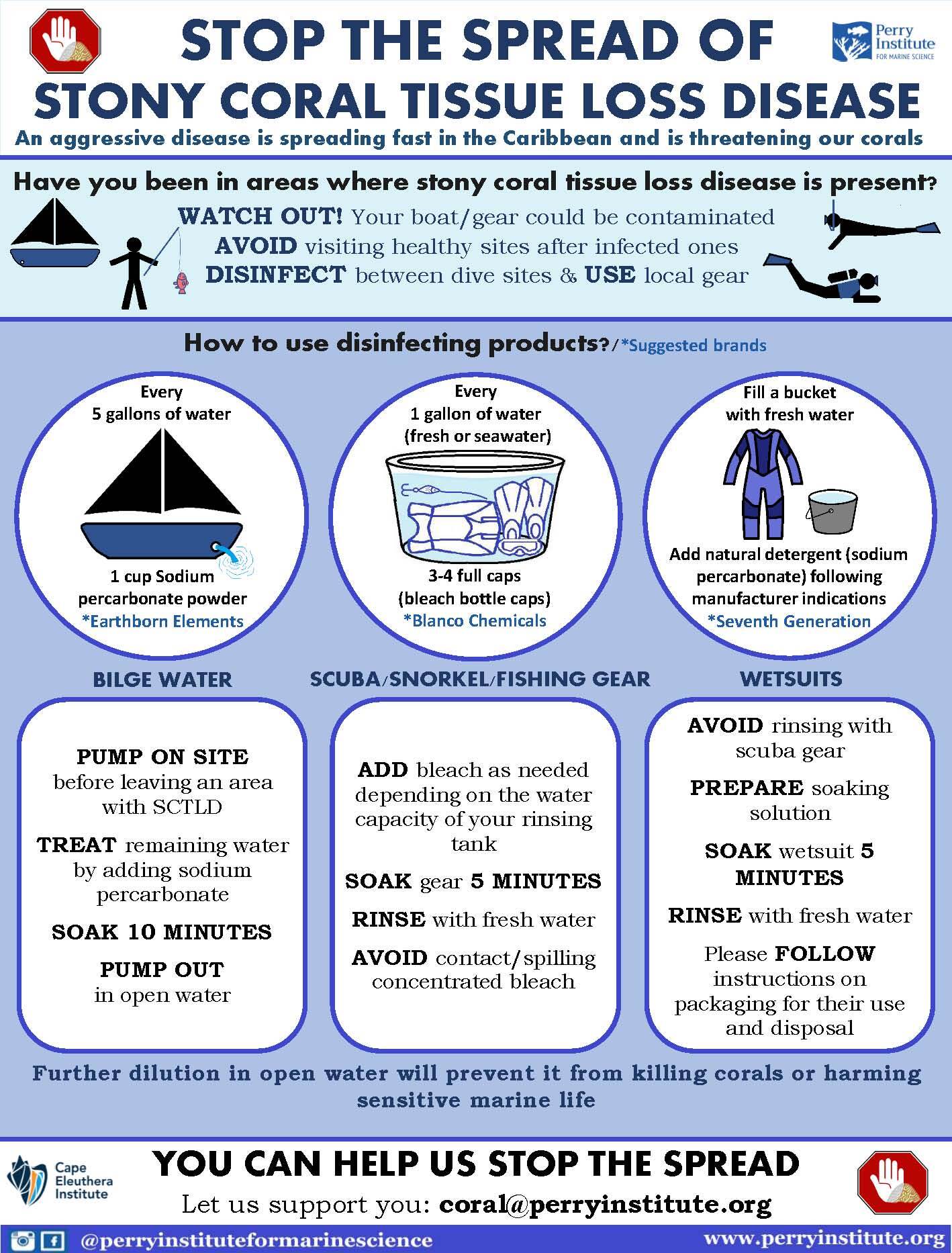
Limit disease transmission by disinfecting bilge water and dive/snorkel gear between sites using a mild bleach solution or hydrogen peroxide-based disinfectant.
Download the resources above and share them with your dive club, marina, tourism operators, and networks. Awareness is the first line of defense.
Donate to PIMS. Your contribution directly funds reef surveys, antibiotic treatments, probiotic research, and the scientists working to save Caribbean coral reefs before it is too late.
Report a Sighting
If you have observed corals showing signs of tissue loss in The Bahamas, your report could help us respond before the disease spreads further. Every sighting matters.
Submit a ReportYour donation funds the scientists, the treatments, the research, and the tools that give Caribbean reefs a fighting chance. This is not a problem that will wait.
Coral Research · Reef Rescue Network · All Research · Join an Expedition